

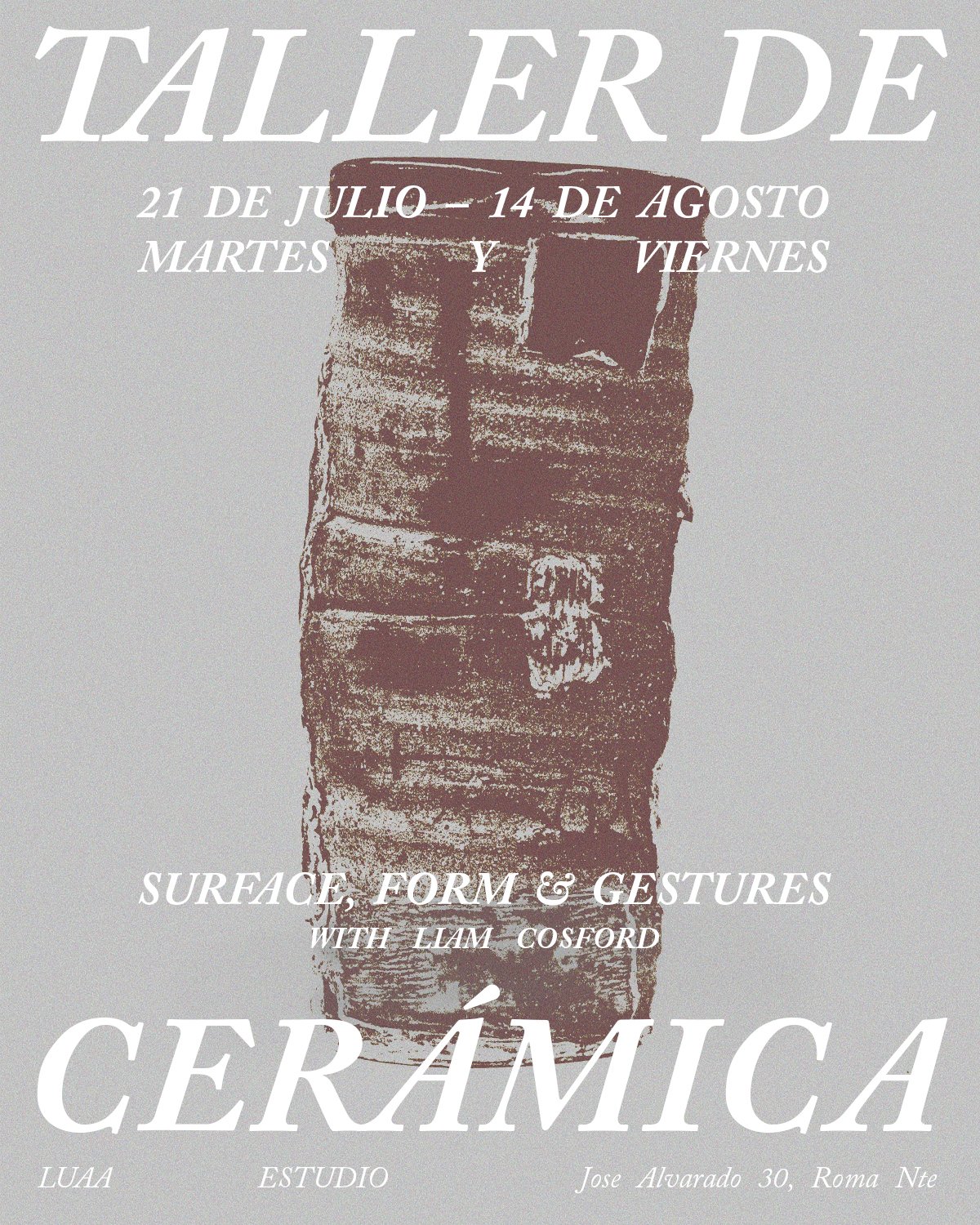
Ceramic Workshop- Surface, Form & Gesture
A 4-week process-led ceramics course exploring form, surface, and
material experimentation.
Instructor: Liam Cosford
Level: Intermediate ceramicists
Format: 2 hour sessions, twice weekly
Duration: 4 weeks (8 sessions)
Workshop Overview
This process-led ceramics workshop encourages participants to move beyond purely functional making and reconsider clay as a material for expression.
The course combines foundational forming techniques with experimental processes such as cutting, altering, pressing, and reconstructing. Rather than focusing on predetermined outcomes, the workshop emphasises intuition, repetition, and material response.
Participants explore clay through making as a form of observation—where variation, imperfection, and transformation begin to inform a more personal approach to working.
Participants will leave with a series of experimental works and a clearer personal approach to making.
Concept & Approach
This workshop responds to the popularity of ceramics as a craft often centred on functional outcomes. While technically valuable, this can limit experimentation.
This course aims to:
-Reimagine how clay can be approached
-Reinterpret traditional techniques through experimentation
-Reconsider the role of process over outcome
-Rethink making as an intuitive and reflective practice
-The act of making becomes as important as the object itself
Learning Outcomes
By the end of the workshop, participants will:
-Shift away from purely functional approaches toward a more exploratory use of clay
-Gain confidence in quickly generating and altering forms
-Develop an understanding of how cutting, reconstructing, and surface intervention can transform form
-Explore texture and surface as active elements within the making process
-Build a more intuitive, responsive approach to working with clay
-Produce a series of experimental studies that reflect process-led exploration
Thecniques Covered
Traditional Form-Making:
-Wheel throwing
-Coiling
-Slab building
-Pinching
Experimental Construction:
-Cutting and reassembling forms
-Adding and subtracting material
-Pressing with tools & found objects
-Surface disruption and texture building
Course Structure (4 Weeks / 8 Sessions)
Week 1 — Generating Form & Alteration (Session 1 & 2)
Focused on rapid form-making using primarily wheel throwing, alongside other techniques if needed. Through timed exercises, participants produce multiple forms, emphasising speed, intuition, and reducing attachment to outcomes. Repetition is used to build momentum and variation.
Using these forms, participants begin cutting, adding, and subtracting, exploring breaking and rebuilding forms. Both sessions introduce a more experimental, less controlled approach to construction.
Week 2 — Expanding Form Language & Surface Exploration (Session 1 & 2)
Introduction of new techniques to generate forms (e.g. scale, proportion, method), continuing the focus on repetition and variation to broaden starting points.
Alongside this, surface becomes a primary element. Participants experiment with pressing found objects, mark-making, and surface disruption, integrating texture into both existing and newly created forms.
Week 3 — Individual Exploration & Development (Session 1 & 2)
Participants consolidate their approach, combining forming, alteration, and surface techniques explored in previous weeks. Emphasis is placed on developing a personal direction, with guidance tailored to individual interests and processes.
Participants reflect on what has emerged in their work—identifying recurring forms, gestures, or methods—and build on these through more intentional making. The focus shifts toward refining ideas, testing variations, and beginning to resolve a small body of work.
Week 4 — Glazing (Session 1 & 2)
Glazing is approached as painting, and an extension of material exploration. Drawing attention to how surface, texture, and form interact through firing rather than as a purely decorative finish.
Participants experiment with layering, opacity, and application methods, considering how glaze interacts with texture and form. The focus is on using glazing as a tool to enhance and extend earlier processes, rather than resolve them.
Teaching method:
Each session begins with a short prompt or exercise designed to shift focus away from outcome and toward process. Emphasis is placed on:
-Time-based making
-Repetition and variation
-Physical engagement with material
-Observation over correction
The workshop encourages a balance between guidance and open exploration.
Price
$5,900 mxn 10% discount for cash payments only
Duration
16 hours total (8 sessions of 2 hours each)
Start Date: July 14 End Date: August 7
What’s Included?
-Guidance and personalized support throughout each class
-8 sessions of 2 hours each
-5 kg of high-fire stoneware clay
-Use of studio tools and materials
-Underglazes and glazes
-Firing of your piece
Pieces larger than 21 cm (8.2 in) at the base or 25 cm (9.8 in) in height may incur an additional firing fee starting at $100 MXN.
When?
Week 1
July 21 & July 24
Week 2
July 28 & July 31
Week 3
Agust 4 & Agust 7
Week 4
August 11 & August 14
Tuesdays: 6:00 PM – 8:00 PM
Fridays: 6:00 PM – 8:00 PM
¡Importante! Si faltas a una clase, y quieres reposición, ésta tendrá un costo adicional de $500 mxn.
Artist Bio
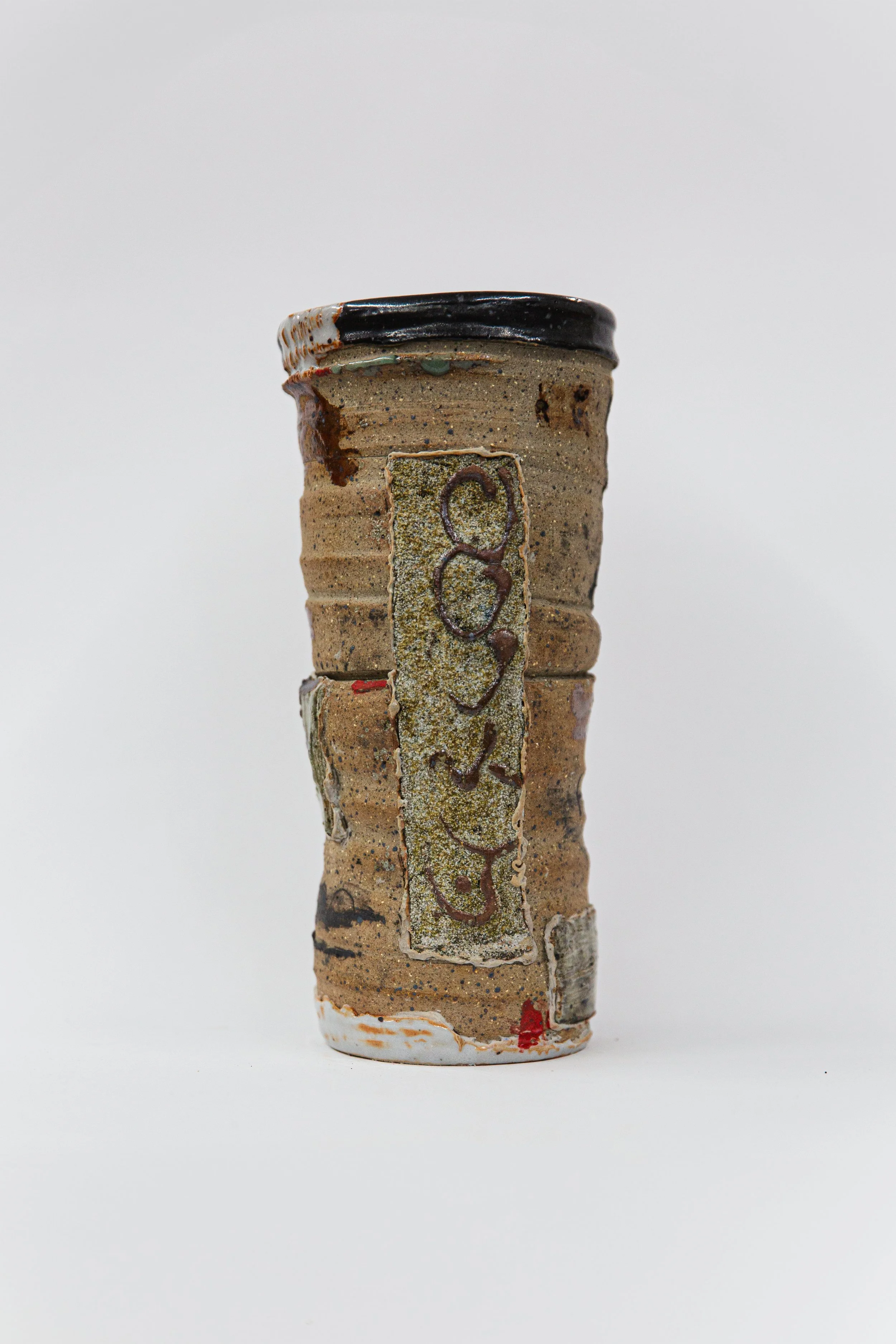
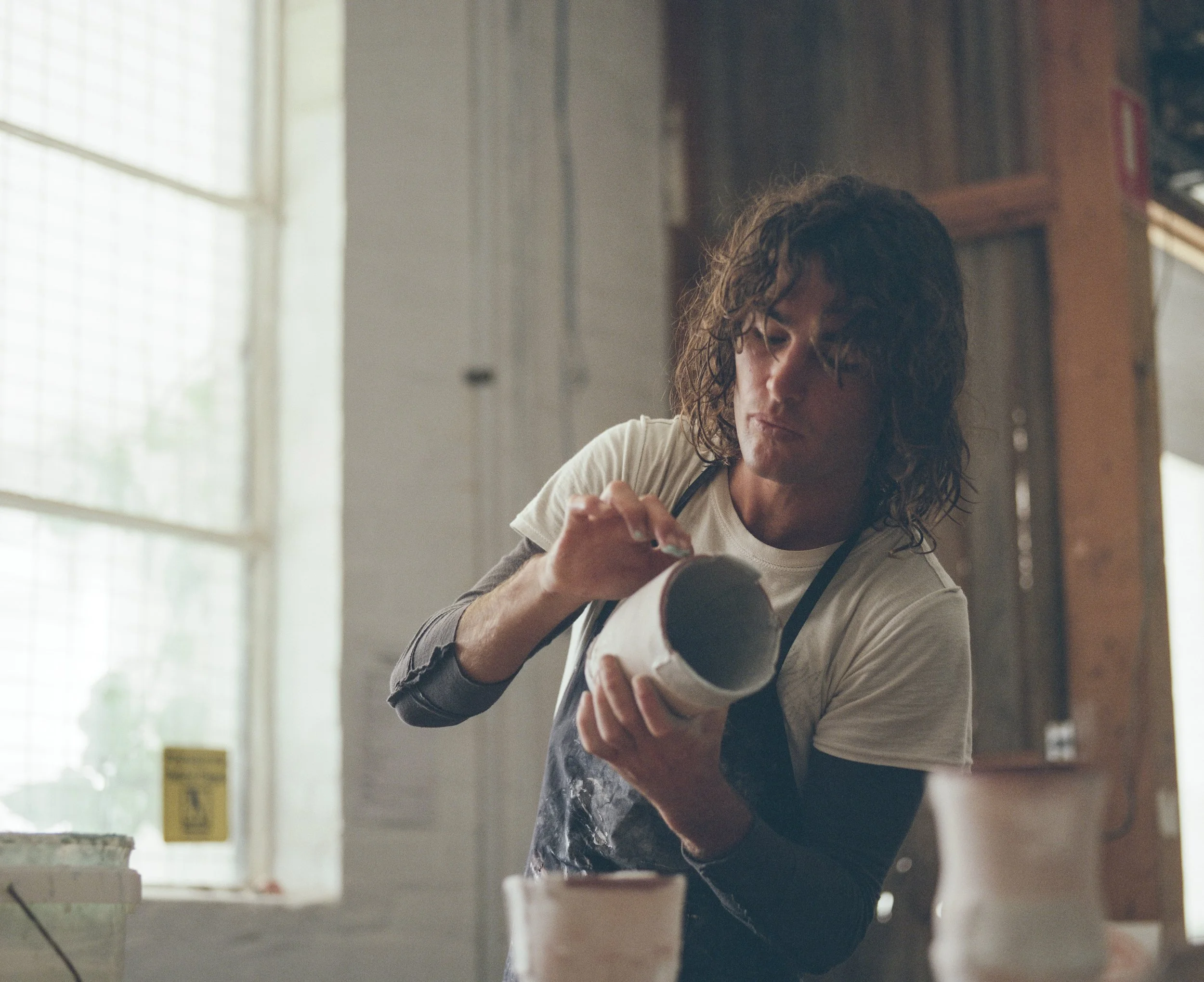
Liam Cosford is a ceramic artist whose practice unfolds through material inquiry, where
surface, gesture, and glaze operate as active, shifting elements. Working through an intuitive
engagement with clay, his process closely follows how the material responds — how it bends,
breaks, and transforms through mark-making and firing.
Variation and irregularity are treated as essential forces within the work. Forms are cut, altered,
and reassembled, allowing process to remain visible and unresolved. Through this approach,
making becomes an open-ended dialogue, where surface and structure evolve together,
revealing the expressive potential inherent in the material itself.
Good To Know
-A 15-minute grace period will be allowed at the beginning of each class.
-Only one make-up class will be available during the course and must be coordinated with both the instructor and the studio, subject to availability.
-If you miss a class and would like an additional make-up session, it will have an extra cost of $500 MXN.
About Your Pieces
-Finished pieces will be ready approximately 15 business days after you complete them. During this time, your work will go through the full ceramic process, including:
* Bisque firing
* Glazing
* Final glaze firing
This ensures your pieces are fully finished, functional, and ready for everyday use. Once your pieces are ready, you will have one and a half months to pick them up from the studio. Pieces that are not collected within this period will be donated.
Revisa las políticas de servicio
Reserva el servicio
Selecciona la fecha y horario disponible.